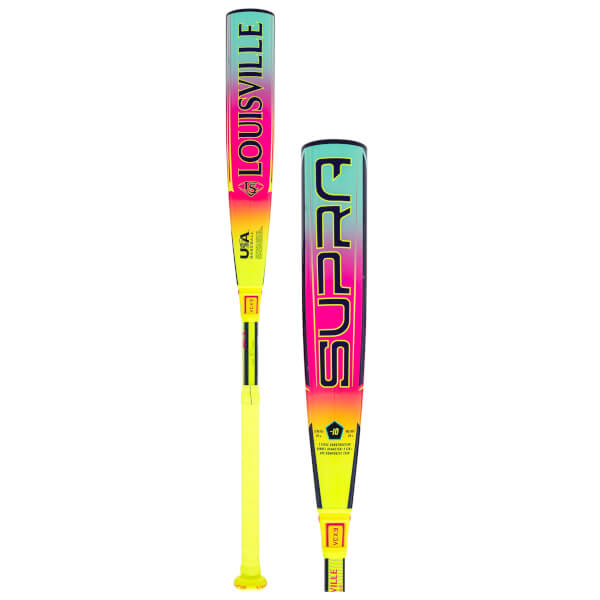
USA (USABat) bats play closer to wood and are required by Little League and most rec leagues. If your player is in Little League Baseball’s Minor or Major divisions, a USABat stamp is mandatory — a USSSA-only bat is not legal there.
Every bat below carries the USABat certification. We rank them into four tiers by performance, durability and price, with the Top 5 in each tier shown first. Always confirm your league’s current rules before you buy.
Last updated: October 2026 · Rankings are re-checked as new models release.
Prices checked Oct 2026 and change often. You'll finish your purchase at JustBats.com, our retail partner. As an Amazon Associate we earn from qualifying purchases
#2
Marucci CATX2 Connect (USA)
USA · alloy · Drops -5, -11
approx. $129.95–$169.95
91/100 Best Bat Finder Score
Pros
End-loaded swing weight: extra barrel mass for power on contact
Alloy construction, -11 drop
Cons
End-loaded bats take more strength and bat speed to swing, so smaller or lighter hitters may find it slow through the zone
Same alloy-barrel tradeoff as other CATX2 models — less pop than composite
Coach Says: A light -11 swing weight suits most younger hitters. Alloy barrels are ready to swing right out of the wrapper and are tough in cold weather. Personally bought this for my child and would buy again.
Prices checked Oct 2026 and change often. You'll finish your purchase at JustBats.com, our retail partner. As an Amazon Associate we earn from qualifying purchases
Tier 2 · Great Choices
Top 5 · Excellent bats scoring 80 to 89, just shy of Tier 1 on performance, durability or value.
Prices checked Oct 2026 and change often. You'll finish your purchase at JustBats.com, our retail partner. As an Amazon Associate we earn from qualifying purchases
#2
Rawlings Icon "The Chosen One" (USA)
USA · alloy · Drop -10
approx. $199.99
81/100 Best Bat Finder Score
Pros
Balanced swing weight, so it gets through the zone quickly and is easier to control
A limited-edition colorway of the well-reviewed Icon line
Coach Says: A limited-edition take on the Icon — compare it side by side with the standard Icon -10 before choosing.
Prices checked Oct 2026 and change often. You'll finish your purchase at JustBats.com, our retail partner. As an Amazon Associate we earn from qualifying purchases
#3
2024 Marucci F5 JBB (USA/USSSA)
USA · alloy · Drop -10
Est. $120
80/100 Best Bat Finder Score
Pros
Good for developing hitters focused on timing and control
Cons
Lower performance ceiling than premium composite bats
Alloy barrel has a stiffer feel
Coach Says: Perfect "first real bat" without the premium price tag. This is an older model, so it's often deeply discounted. If the fit and certification work for your league, it's a quality bat at a bargain price.
Prices checked Oct 2026 and change often. You'll finish your purchase at JustBats.com, our retail partner. As an Amazon Associate we earn from qualifying purchases
#4
Warstic Bonesaber Hybrid (USA)
USA · hybrid · Drop -8
approx. $249.95
80/100 Best Bat Finder Score
Pros
Balanced swing weight, so it gets through the zone quickly and is easier to control
Hybrid construction at a price below most pure composite Tier 1 bats
Cons
Brand new, so there aren't many user reviews yet to judge durability — but based on initial specs it looks promising
Coach Says: A newer name that's worth a look if you want something a little different from the big brands.
Prices checked Oct 2026 and change often. You'll finish your purchase at JustBats.com, our retail partner. As an Amazon Associate we earn from qualifying purchases
#5
Marucci CATX2 Composite (USA)
USA · Drop -10
approx. $179.95
80/100 Best Bat Finder Score
Pros
Certified for its listed league
Coach Says: Legal for USABat leagues like Little League and most rec ball. Priced a bit below the middle of its class. Personally bought this for my child and would buy again.
Prices checked Oct 2026 and change often. You'll finish your purchase at JustBats.com, our retail partner. As an Amazon Associate we earn from qualifying purchases
Other Tier 2 picks · ranked by score
Soldier Tank 2 (USA)
Balanced swing weight, so it gets through the zone quickly and is easier to control
Brand new, so there aren't many user reviews yet to judge durability — but based on initial specs it looks promising
Coach Says: A -10 is the sweet spot for most players ages 8 to 12. Composite barrels need a break-in period, so expect the pop to build over the first batch of swings, and register the warranty right away.
Prices checked Oct 2026 and change often. You'll finish your purchase at JustBats.com, our retail partner. As an Amazon Associate we earn from qualifying purchases
#2
2026 Rawlings Threat (USA)
USA · alloy · Drop -12
Est. $180
78/100 Best Bat Finder Score
Pros
Lighter swing weight — easy for smaller players to control
USA-certified for Little League play
Cons
Less pop than composite options in the same price range
Coach Says: Great for a smaller player who needs bat speed over power. This is last year's model, and the 2027 version is the new release. That's your chance to get a quality bat at a quality price, so shop around for a markdown.
Prices checked Oct 2026 and change often. You'll finish your purchase at JustBats.com, our retail partner. As an Amazon Associate we earn from qualifying purchases
Prices checked Oct 2026 and change often. You'll finish your purchase at JustBats.com, our retail partner. As an Amazon Associate we earn from qualifying purchases
#4
Louisville Slugger Meta (USA)
USA · composite · Drop -10
approx. $220–$279.95
70/100 Best Bat Finder Score
Pros
Balanced swing weight, so it gets through the zone quickly and is easier to control
Composite barrel at a price below several Tier 1 peers
Coach Says: A -10 is the sweet spot for most players ages 8 to 12. Composites take some swings to break in and are not meant for cold-weather batting practice.
Prices checked Oct 2026 and change often. You'll finish your purchase at JustBats.com, our retail partner. As an Amazon Associate we earn from qualifying purchases
#5
2027 DeMarini Zen (USA)
USA · Drop -10
approx. $349.95
67/100 Best Bat Finder Score
Pros
Certified for its listed league
Coach Says: Legal for USABat leagues like Little League and most rec ball. One of the pricier bats in its class, so it is a real investment.
Prices checked Oct 2026 and change often. You'll finish your purchase at JustBats.com, our retail partner. As an Amazon Associate we earn from qualifying purchases
Tier 4 · Beginner Friendly
Top 5 · Budget-friendly, forgiving bats built for players just starting out.
Our winner
2026 Easton Hype Fire Tee Ball (USA)
USA · composite · Drop -13
Est. $90
80/100 Best Bat Finder Score
Pros
Built specifically for tee ball — very light and easy to swing
Large barrel helps first-time hitters make contact
Cons
Not intended for coach-pitch or higher levels — sized specifically for tee ball
Coach Says: The best "first bat" money can buy — get your slugger started right. This is last year's model, and the 2027 version is the new release. That's your chance to get a quality bat at a quality price, so shop around for a markdown. Personally bought this for my child and would buy again.
Prices checked Oct 2026 and change often. You'll finish your purchase at JustBats.com, our retail partner. As an Amazon Associate we earn from qualifying purchases
#2
2026 Marucci CATX Rckless Tee Ball (Alloy)
USA · alloy · Drops -11, -13
approx. $99–$99.95
80/100 Best Bat Finder Score
Pros
Budget-friendly entry point
Durable one-piece alloy construction — built for beginner wear and tear
Cons
Basic performance compared to composite tee ball bats
Coach Says: You can't go wrong here for a 5-year-old's very first bat. Heads up: this is last year's model. Newer bats usually bring the price down on the previous year's version, which makes it a smart value buy for a growing player.
Prices checked Oct 2026 and change often. You'll finish your purchase at JustBats.com, our retail partner. As an Amazon Associate we earn from qualifying purchases
#3
Louisville Slugger Solo 619 (USA)
USA · alloy · Drop -11
approx. $64.95
80/100 Best Bat Finder Score
Pros
Balanced swing weight, so it gets through the zone quickly and is easier to control
Genuinely low price for that level of proof
Cons
Alloy performance — a value and durability pick, not a power pick
Coach Says: A proven, budget-friendly option — a great fit for a first bat or a growing player.
Prices checked Oct 2026 and change often. You'll finish your purchase at JustBats.com, our retail partner. As an Amazon Associate we earn from qualifying purchases
#4
Louisville Slugger Solo Speed 619 (USA)
USA · alloy · Drop -13
approx. $69.95
80/100 Best Bat Finder Score
Pros
Balanced swing weight, so it gets through the zone quickly and is easier to control
Lighter -13 drop, well suited to a smaller or younger developing hitter
Cons
Same alloy tradeoff as its -11 sibling — value over pop
Coach Says: A very light -13 for the youngest and smallest hitters. Alloy barrels are ready to swing right out of the wrapper and are tough in cold weather.
Prices checked Oct 2026 and change often. You'll finish your purchase at JustBats.com, our retail partner. As an Amazon Associate we earn from qualifying purchases
#5
2026 Rawlings Machine (USA Alloy)
USA · alloy · Drop -10
Est. $150
79/100 Best Bat Finder Score
Pros
Solid, dependable alloy build for beginner-to-intermediate hitters
Good value for a growing player who'll outgrow bats quickly
Coach Says: The bat you buy when you know they'll outgrow it by next season. This is last year's model, and the 2027 version is the new release. That's your chance to get a quality bat at a quality price, so shop around for a markdown.
Prices checked Oct 2026 and change often. You'll finish your purchase at JustBats.com, our retail partner. As an Amazon Associate we earn from qualifying purchases
About our bat scores
Every bat gets a Best Bat Finder Score from 0 to 100. Scores are our own opinion, not a guarantee of fit or performance, and they are updated as new information becomes available. Within each tier, higher scores rank first. Every pro, con and coaching note is our own writing. Rankings are never sold.
Frequently asked questions
Can I use a USSSA bat in Little League?
No. Little League Baseball Minor and Major divisions require the USA Baseball USABat stamp. Little League's Intermediate and Junior divisions allow either USA or BBCOR bats, and Senior League requires BBCOR only.
What's the difference between USA, USSSA, and BBCOR bats?
USA (USABat) bats play closer to wood and are required by Little League and most rec leagues. USSSA bats allow more barrel flex for extra pop and are used in most competitive travel ball. BBCOR bats are required for high school and college, always at a -3 drop, and play closest to wood at the higher levels. A bat certified for one is usually not legal in the others.
What size bat does my child need?
Bat length is mostly driven by height, and drop weight mostly by age and strength. A player around 4 foot 4 to 4 foot 7 typically swings a 27 to 28 inch bat, while a player around 5 foot 4 to 5 foot 7 is usually in a 30 to 31 inch bat.
What's the difference between alloy, composite, and hybrid bats?
This is about barrel material, separate from certification. Alloy bats have a stiffer feel, need no break-in, and tend to be more durable and affordable with slightly less pop. Composite bats flex more for a livelier feel and often a bigger sweet spot, but need a break-in period and are more prone to hairline cracks over time. Hybrid bats pair a composite barrel with an alloy handle for a blend of both.